Lunar Oceans - Citizen Science

Lunar Oceans
Lunar Oceans is an art and science project from the University of Plymouth. It looks at how moonlight, the tides and artificial light at night affect the animals living on our shores, and it invites you to explore, count and help us find out more.
Running from September 2026 to September 2027, it is part of Voyage of Discovery, Plymouth's European Researchers' Night programme.
Join the Flat Periwinkle Colour Survey
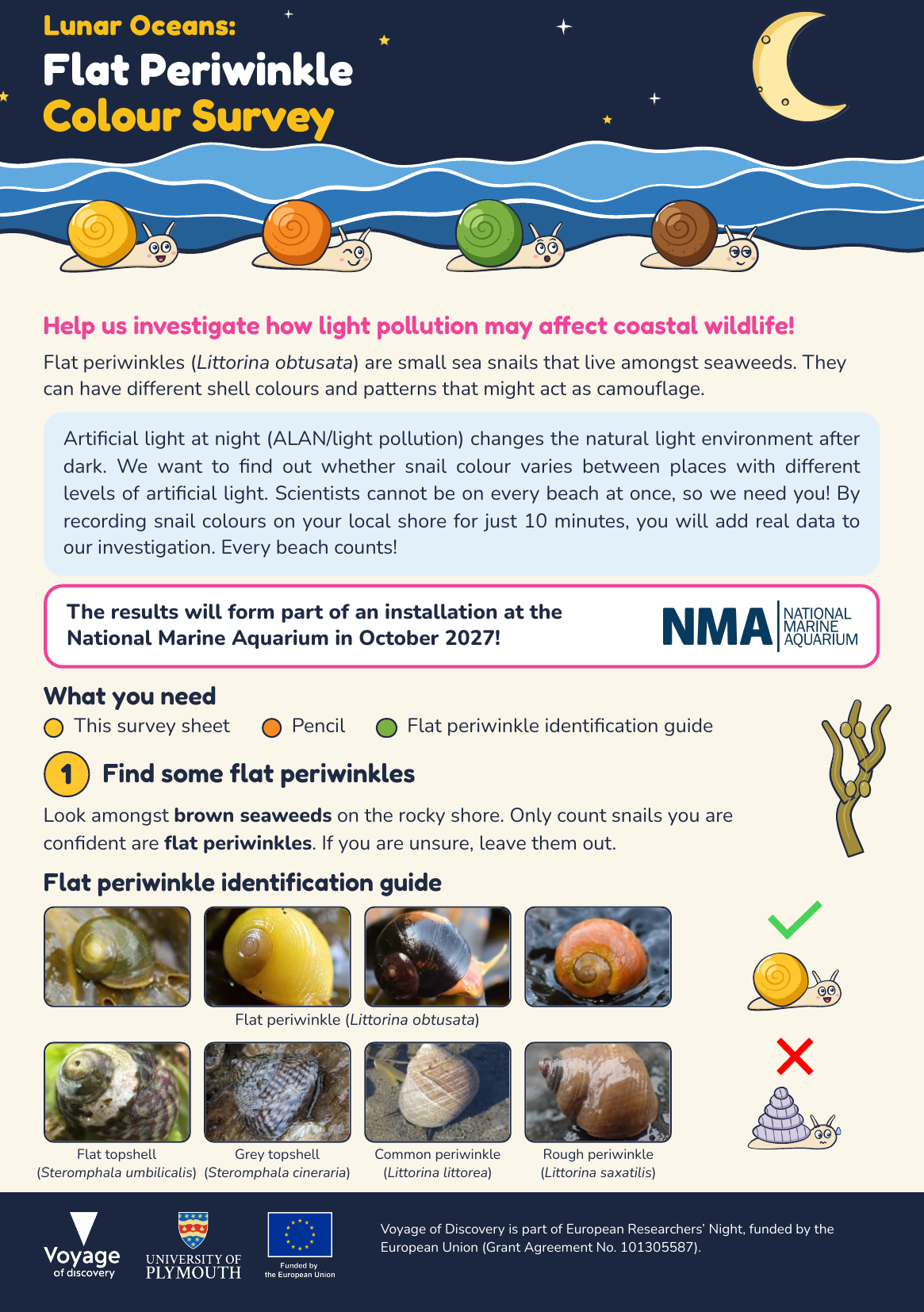
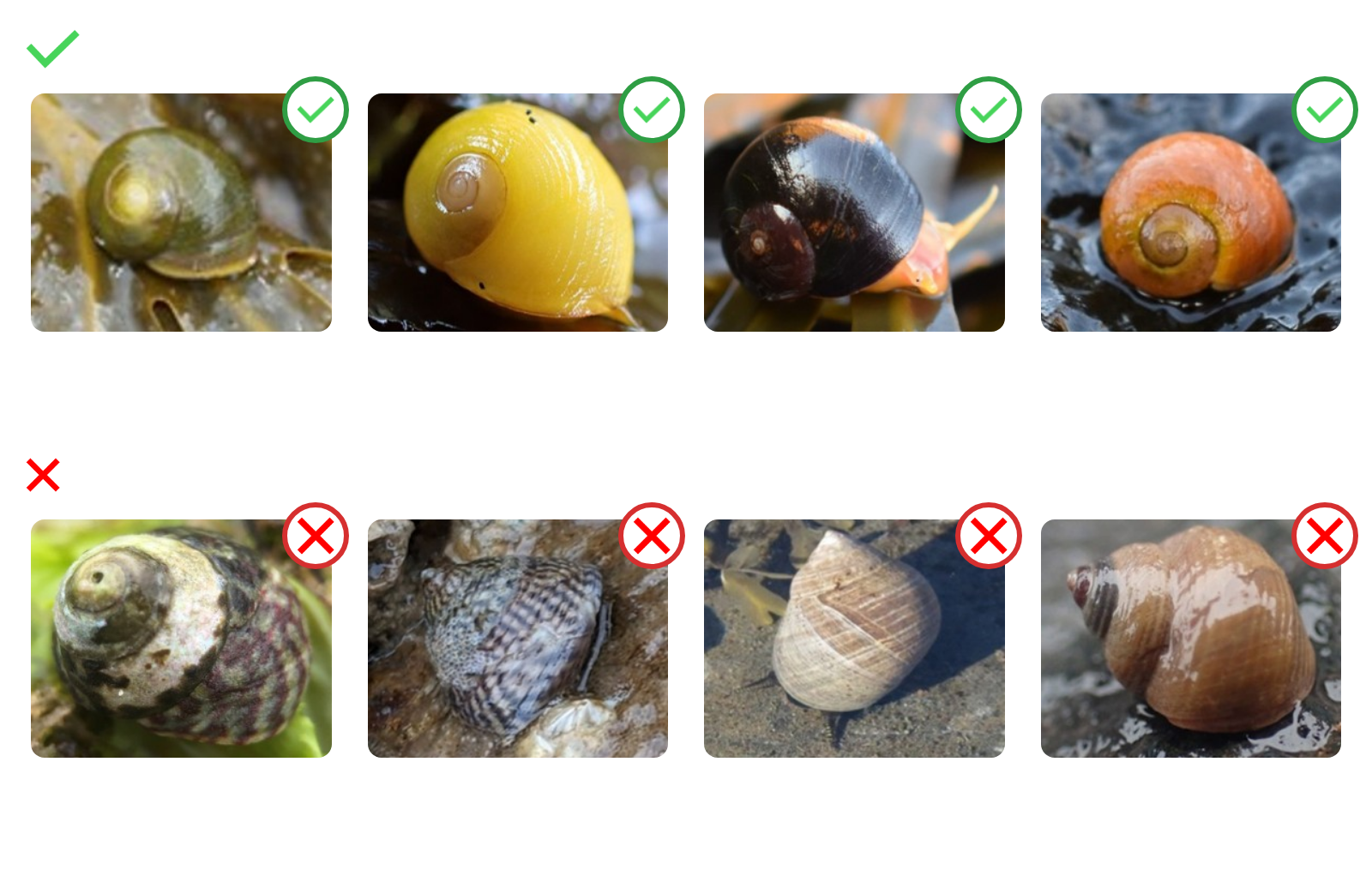
Flat periwinkles are small sea snails that live amongst seaweeds. Their shells come in different colours and patterns, which might act as camouflage. We want to know whether the mix of snail colours changes between places with different amounts of artificial light at night.
Counts from beaches around the coast will be combined so scientists can look for patterns.
One survey can show a pattern but cannot prove what causes it, so every extra beach helps.
1. Find some flat periwinkles
Look amongst brown seaweeds on the rocky shore.
Only count snails you are confident are flat periwinkles.
If you are unsure, leave them out.
Please handle snails gently and return them to where you found them.
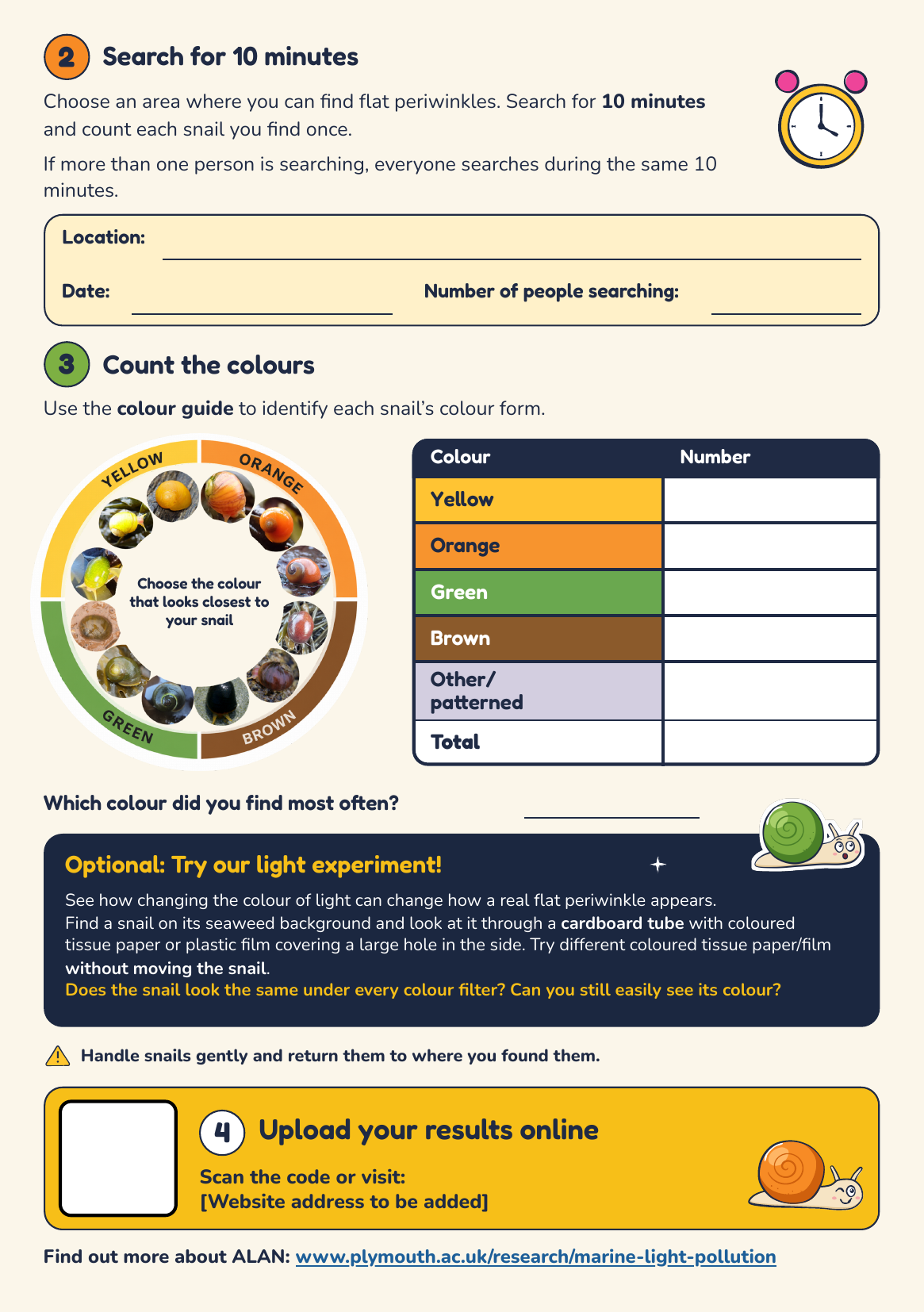
2. Search for 10 minutes
Count the colours you find on the survey sheet.
3. Send us your results
Use the short form below. No names or personal details needed.



Send in your results
Counted your snails?
Fill in the short form to send us your results. It takes about five minutes.
The form does not ask for names or any personal details, so please do not include any.
It asks only for where you searched, the date, how many people searched and your snail counts.
Downloads
Classroom activity
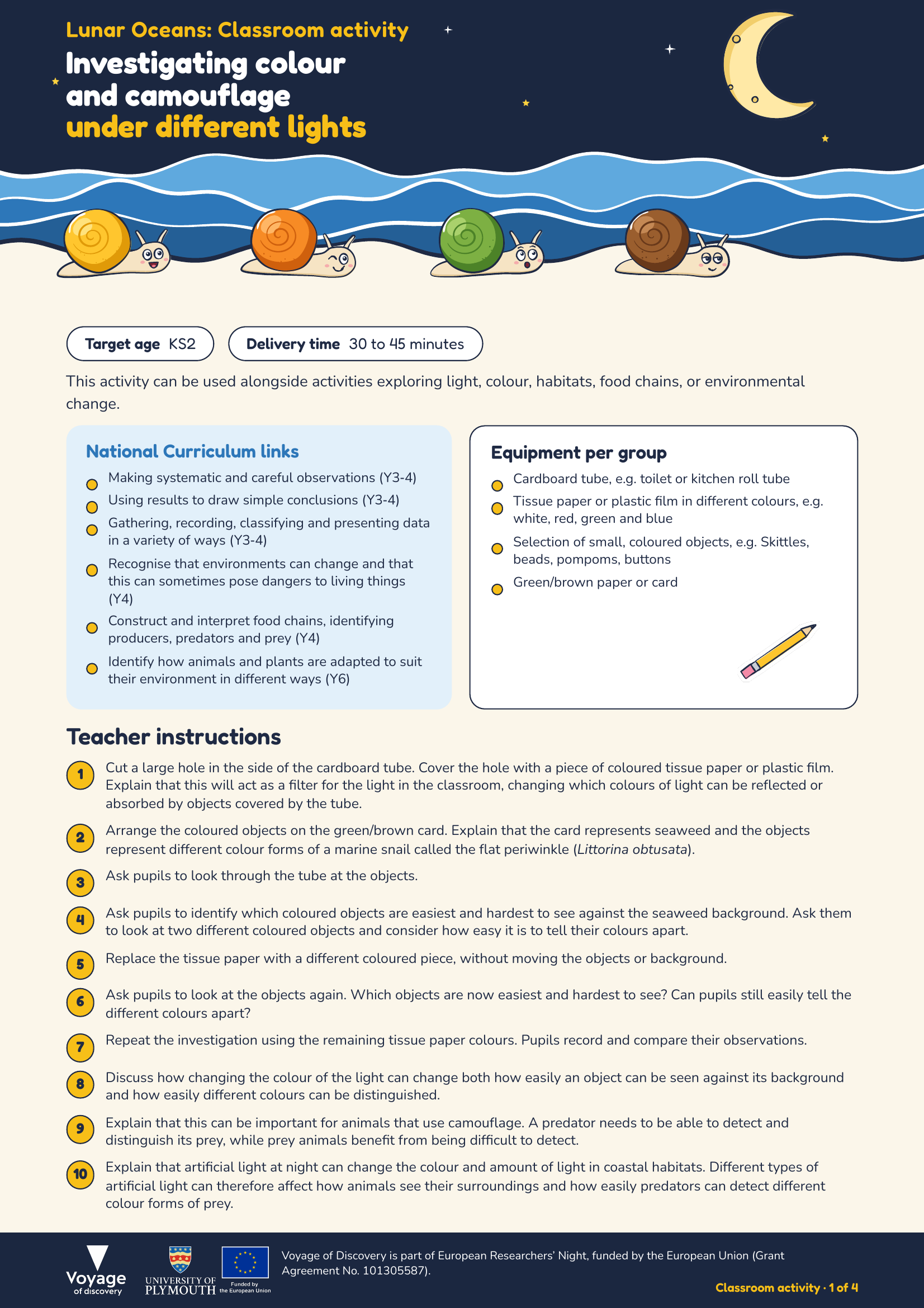
Colour and camouflage in the classroom. 30 to 45 minutes.
Pupils use coloured filters to see how the colour of light changes what we can see, using small coloured objects on green and brown card. Includes a teacher guide, pupil worksheet and answers.
Links to light, colour, habitats and food chains.
Activity card
Everything you need to run your own citizen science survey: a colour guide, a space to record your counts and an optional light experiment.
Suitable for families and children.
Rocky shore field trip
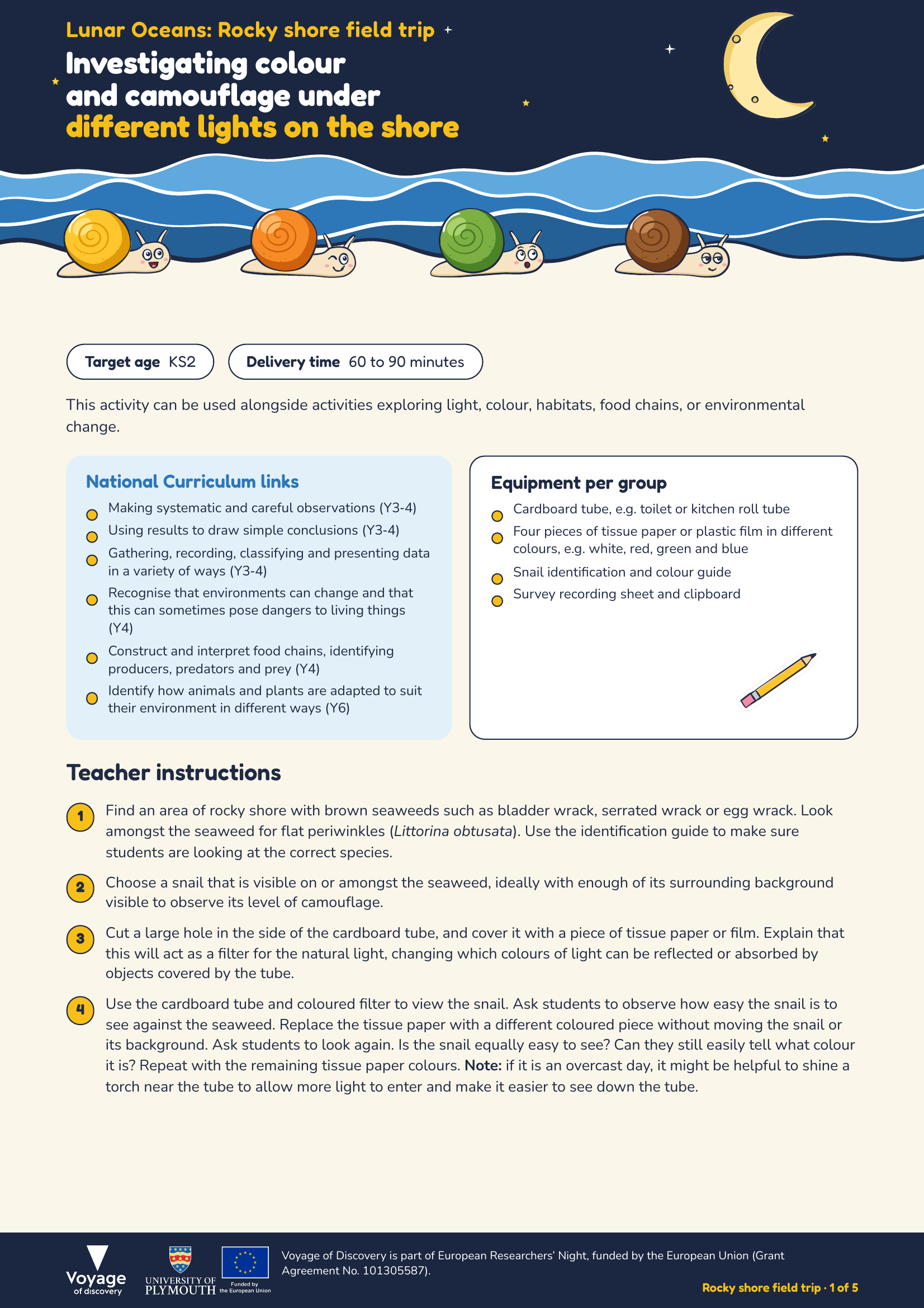
Colour and camouflage on the rocky shore. 60 to 90 minutes.
The same investigation with real flat periwinkles on the shore, followed by the 10-minute colour survey. Includes a teacher guide, pupil worksheet and answers.
Links to observation, recording data and how animals adapt to their environment.
The background
Many sea animals use the Moon and the natural night sky to find their way, hide, feed and time important moments in their lives. The Moon also pulls the tides, which shape where shore animals live and when they are covered by water.
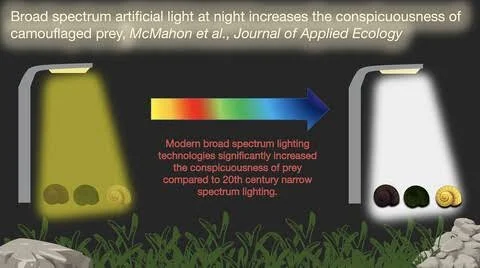
Lights from towns, harbours and coastal roads can wash out that natural darkness, even a long way out to sea. This is called artificial light at night, or ALAN. Researchers are working to understand what it means for life on the coast.
Lunar Oceans is based on AquaPlan, a European research project funded through the EU's Horizon Europe programme, which studies how light and noise affect life in the water.
Read more about marine light pollution research at the University of Plymouth
The Researchers
Dr Thomas Davies
Marine biologist and Associate Professor of Marine Conservation at the University of Plymouth. Thomas studies how artificial light at night changes life in the sea, from tiny shore animals to coral reefs. He leads Plymouth's part of AquaPlan.
Dr Sarah Blissett
Artist and performance researcher at the University of Plymouth.
Sarah uses storytelling and performance to bring research to life for people who might never read a science paper.
The interactive trail
A new interactive trail is coming as part of Lunar Oceans.
It will use light, sound and storytelling to take visitors
through the story of the Moon, the tides and the animals of the shore.
Details of where and when will be announced here and on our social channels.